Cardboard, newspaper, plywood — and the great paper murals of Studio Plinio. Cartone, giornale, compensato — e i grandi murali di carta dello Studio Plinio.
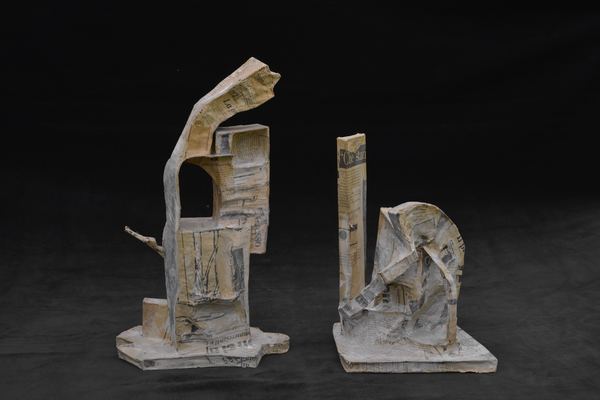
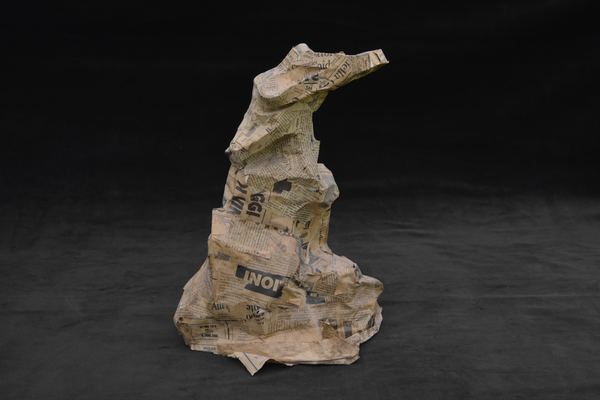
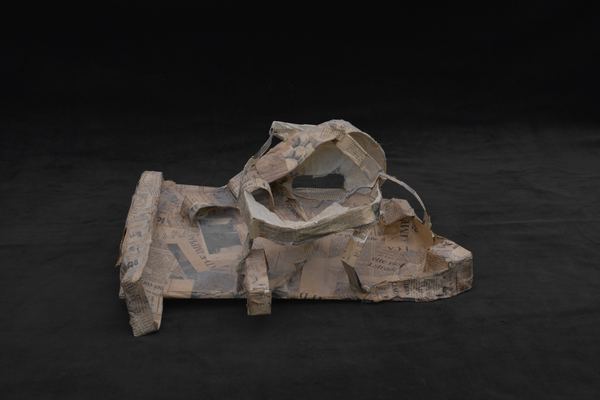
The earliest works preserved in the archive date to 1970. They are small, pale, organic — structures built from cardboard and carefully wrapped in pages of Italian newspapers of the time. Words still surface on their skin: "VIVAI", "SINDACA", "ECCEZIONALE" — fragments of Rome in its political years, held quietly inside the sculpture.
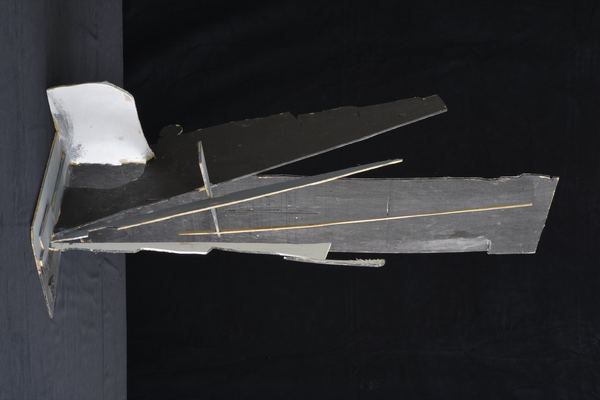
Alongside these, a set of panels in plywood painted in white, grey and black — tilted, leaning, almost architectural. The two families could not look more different, yet they share the same hand: a search for weight without mass, for the way a surface can hold a form up or let it fall.
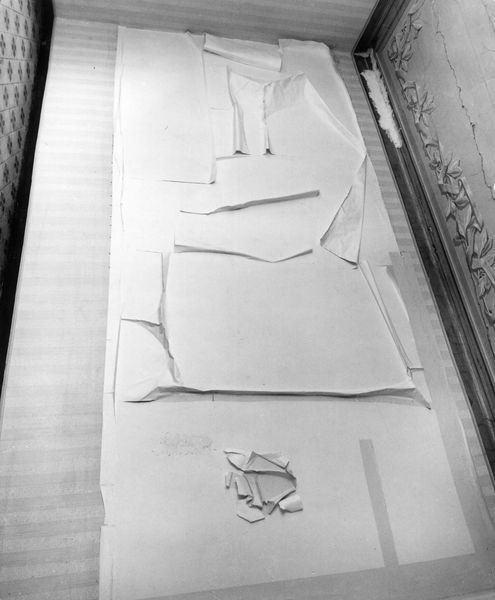
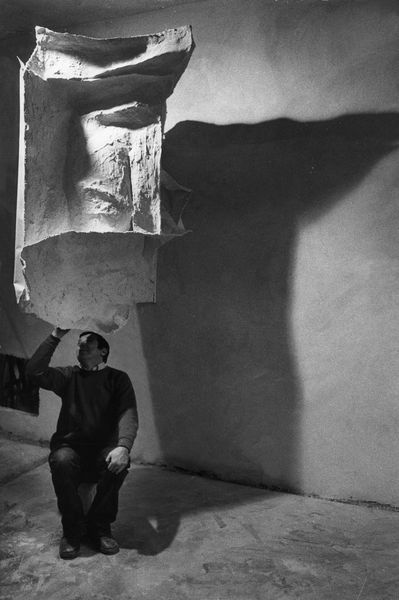
By the mid-1970s, in the rooms of Studio Plinio in Rome — recognisable by their stuccoed ceilings and tile-flowered floors — the search becomes monumental. Paul installs great murals of paper directly onto the walls, three by six metres of folded, torn, light-catching surface. He photographs them carefully, sometimes standing inside the frame to give the scale. They will not survive the room they were made in.
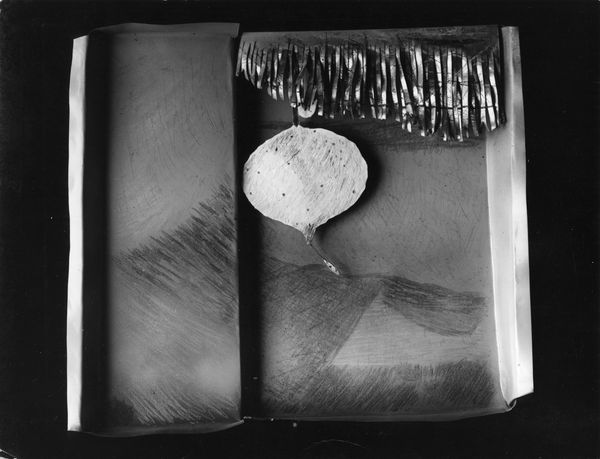
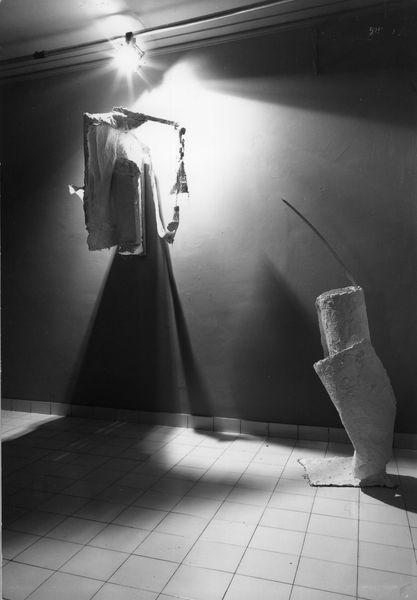
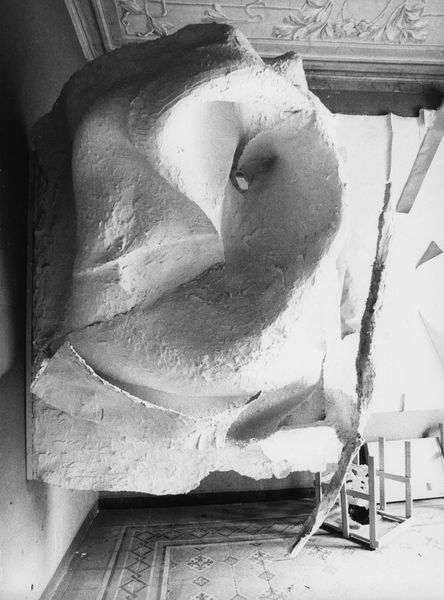
By 1978, the paper has hardened into plaster and papier-mâché: white wall reliefs and a floor sculpture, lit in a gallery and titled Vertical Art. This is Paul Klerr at the beginning, and already at the foundation of everything that will come later — the peperino, the reliefs, the Klein blue.
Le opere più antiche conservate nell'archivio risalgono al 1970. Sono piccole, pallide, organiche — strutture costruite in cartone e rivestite con pagine di giornali italiani dell'epoca. Le parole affiorano ancora sulla pelle: "VIVAI", "SINDACA", "ECCEZIONALE" — frammenti della Roma dei suoi anni politici, tenuti in silenzio dentro la scultura.
Accanto a queste, una serie di pannelli in compensato dipinti in bianco, grigio e nero — inclinati, appoggiati, quasi architettonici. Le due famiglie non potrebbero essere più diverse, eppure hanno la stessa mano: la ricerca di un peso senza massa, del modo in cui una superficie può reggere una forma o lasciarla cadere.
A metà degli anni Settanta, nelle stanze dello Studio Plinio a Roma — riconoscibili per i soffitti decorati a stucco e i pavimenti a fiori — la ricerca si fa monumentale. Paul installa grandi murali di carta direttamente sulle pareti, tre metri per sei di superficie piegata, lacerata, che cattura la luce. Li fotografa con cura, a volte mettendosi nell'inquadratura a dare la scala. Non sopravviveranno alla stanza in cui sono stati fatti.
Nel 1978 la carta si fa gesso e cartapesta: rilievi a parete bianchi e una scultura a terra, illuminati in galleria con il titolo Vertical Art. È Paul Klerr all'inizio, e già al fondamento di tutto quello che verrà poi — il peperino, i rilievi, il blu Klein.
Este texto biográfico está disponible en italiano e inglés. La navegación y las secciones principales están traducidas al español.
Ce texte biographique est disponible en italien et en anglais. La navigation et les sections principales sont traduites en français.
"Weight without mass — a surface that can hold a form up, or let it fall." "Peso senza massa — una superficie che può reggere una forma, o lasciarla cadere."From the archive notesDalle note d'archivio