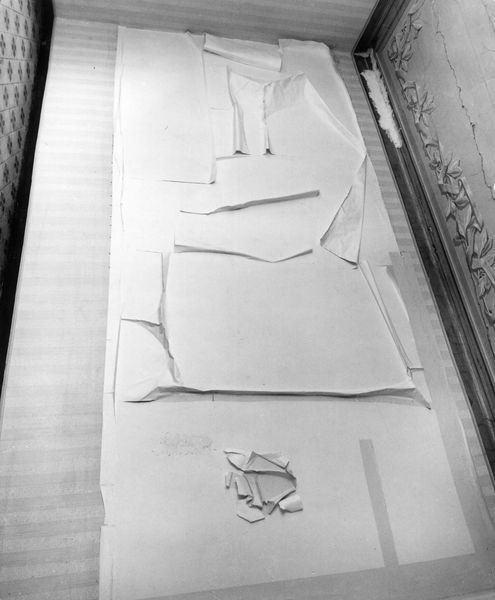
Paper mural
Paper installed on wall (Studio Plinio cycle, Rome)
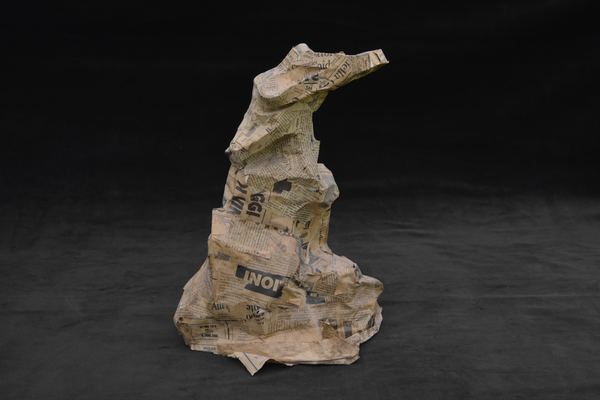
Newspaper structure
Cardboard covered in newspaper
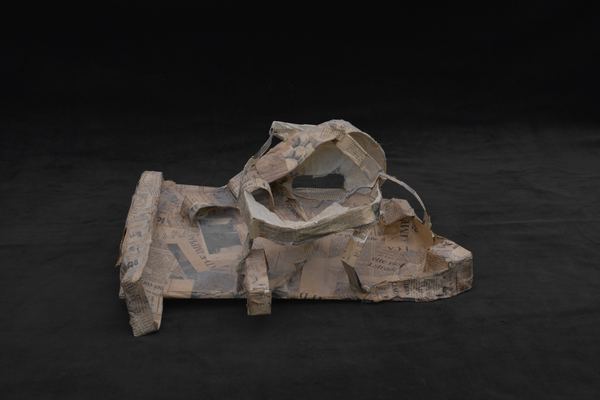
Horizontal structure
Cardboard covered in newspaper
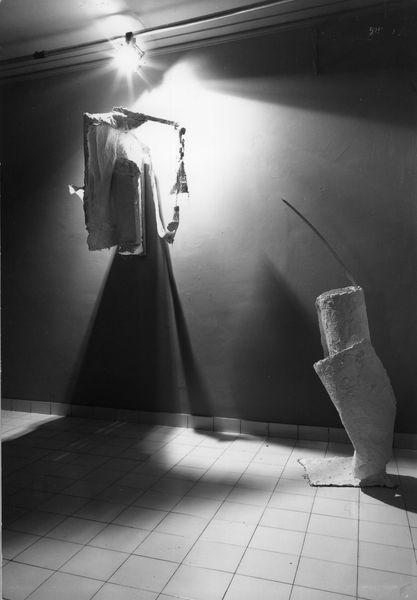
Paper work
Cut and marked paper, artist's book
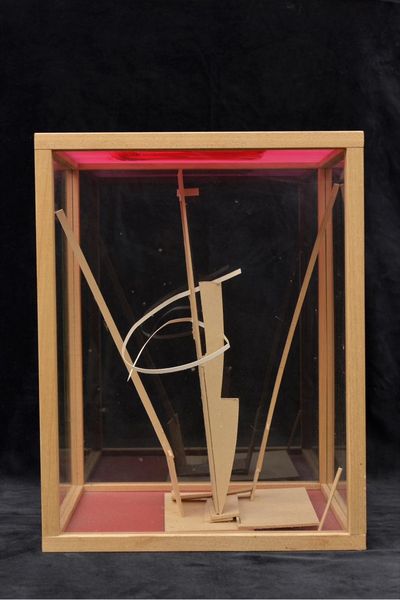
Cardstock model in glass case
MODELLO in Pressed cardstock DENTRO SCATOLA in VETRO and Wood
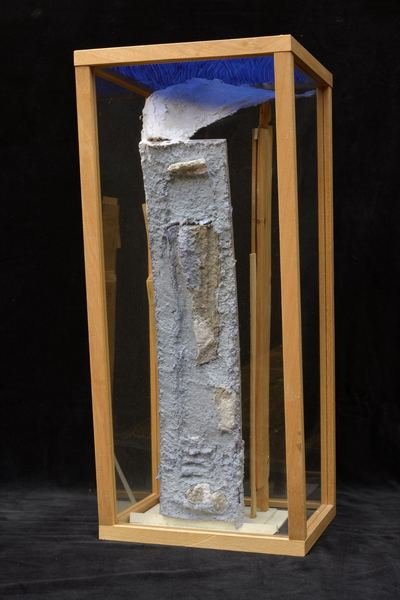
Cardstock model in glass case
MODELLO in Pressed cardstock with blue/grey colour in SCATOLA of VETRO and Wood
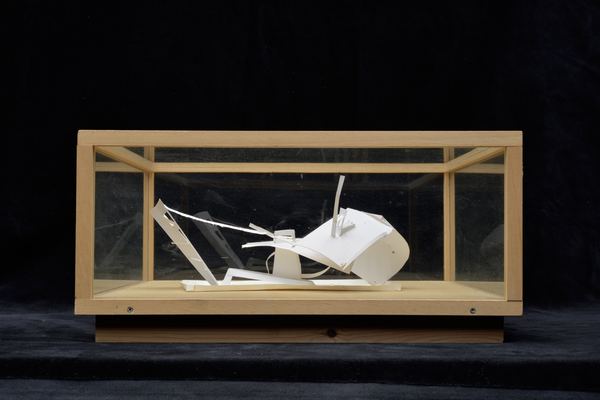
Paper model in glass case
MODELLO in Paper in SCATOLA of VETRO and Wood
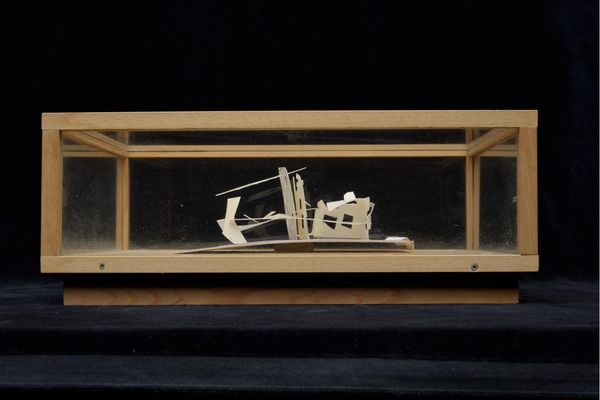
Paper model in glass case
MODELLO in Paper in SCATOLA of VETRO and Wood
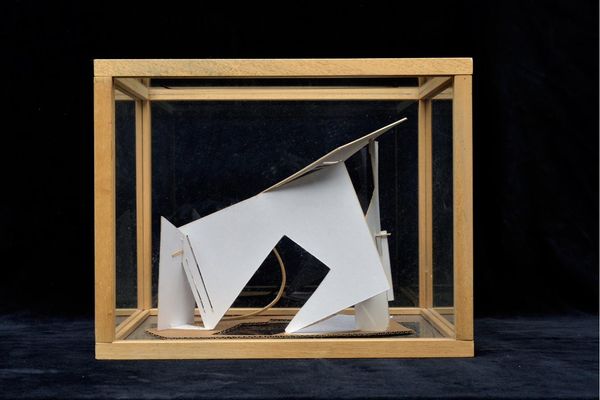
White model in case
Pressed cardboard in glass and wood case
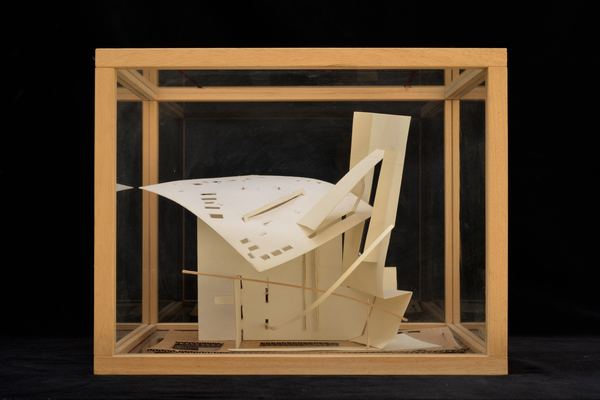
Paper model in glass case
MODELLO in Paper and cardboard in SCATOLA of VETRO and Wood
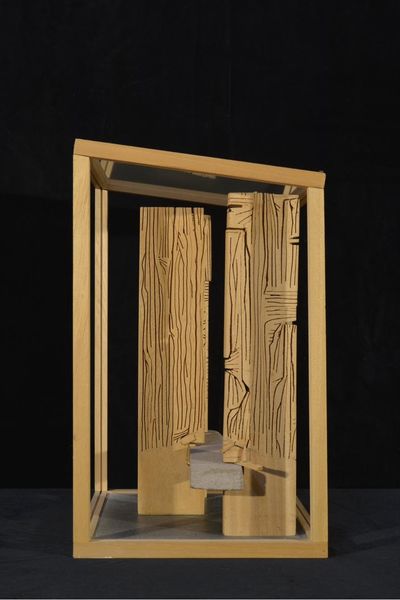
Peperino and wood
Cut wood in glass case with peperino
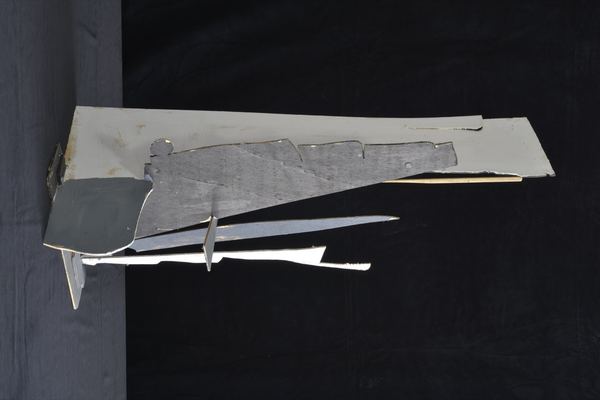
Vertical sail structure
Painted wood and cardboard